
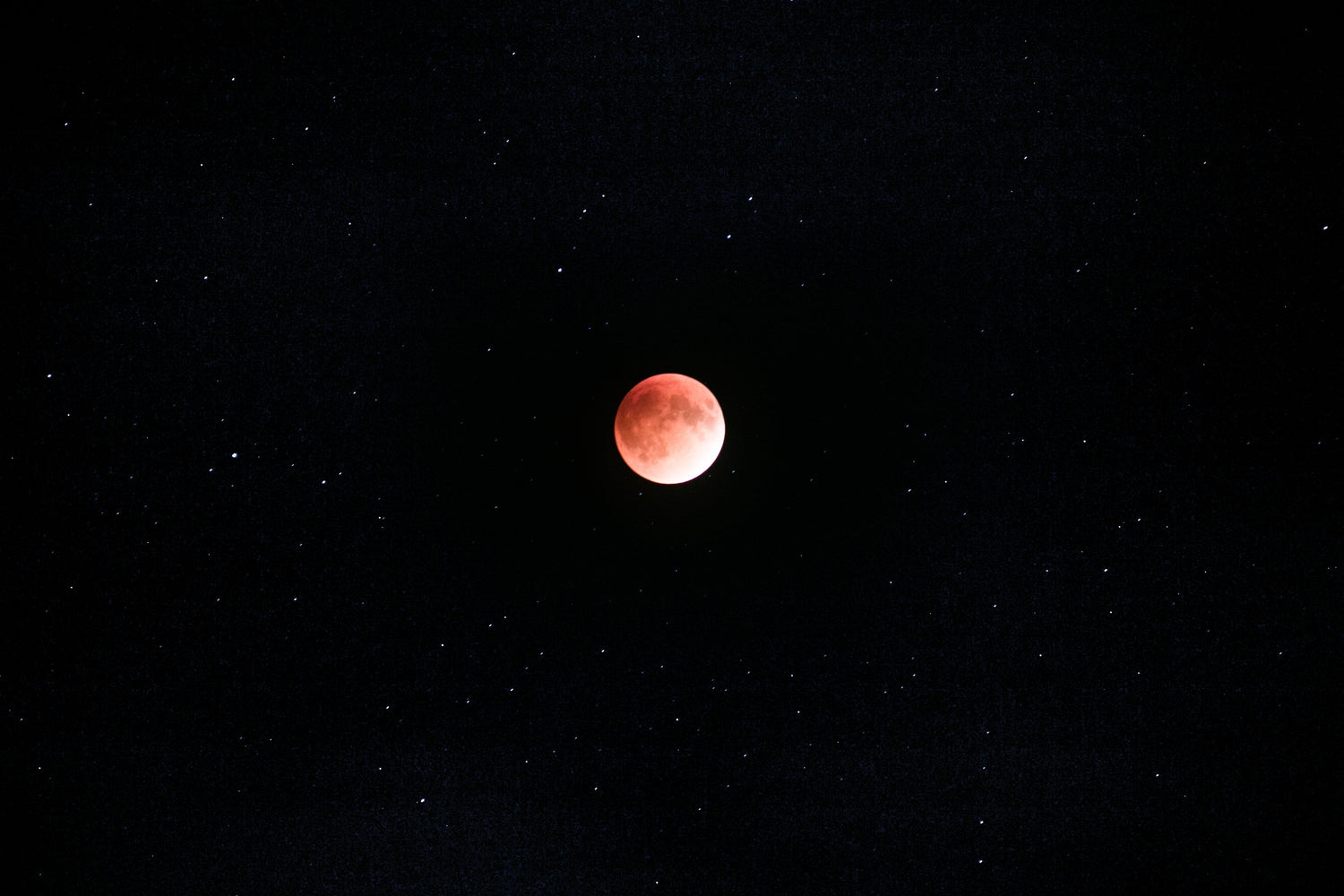
According to Stardome Observatory, the only lunar eclipse of 2026 will begin on Tuesday, March 3rd around 9:45pm, with the best time to catch the full effect sitting around 12:30am.
If you’re planning to stay up late (or set an alarm), you’ll be treated to one of the most captivating sights in our night sky — a Blood Moon.
Here’s what’s happening, and how to make the most of it here in Aotearoa.
What Is a Blood Moon?
A Blood Moon occurs during a total lunar eclipse.
This happens when:
1. The Earth moves directly between the Sun and the Moon.
2. Earth’s shadow completely covers the Moon.
3. Sunlight filters through Earth’s atmosphere, scattering blue light and allowing red tones to pass through.
That filtered light is what gives the Moon its deep red or copper colour.
Unlike a solar eclipse, a lunar eclipse is completely safe to view with the naked eye. No special glasses required. Just step outside and look up.
That said, binoculars or a telescope will reveal much more detail — especially the Moon’s craters and the gradual movement of Earth’s shadow across its surface.
How to Get the Best Viewing Experience in NZ
New Zealand is actually a fantastic place for stargazing. Even our cities aren’t as heavily light-polluted as many overseas centres.
For the best experience:
• Check the weather forecast earlier in the day
• Head somewhere with darker skies if you can — a beach, rural road, or regional park works well
• Give your eyes 15–20 minutes to adjust to the dark
• Avoid bright phone screens while watching
If you’re in Auckland, Wellington, Christchurch or a smaller town, you should still get good visibility — especially if skies are clear.
Do You Need a Telescope for a Lunar Eclipse?
Short answer: No — but it certainly enhances the experience.
The red Moon is clearly visible without equipment. However, using a telescope or astronomy binoculars allows you to:
• See detailed lunar craters and surface texture
• Watch Earth’s shadow slowly move across the Moon
• Notice subtle shifts in red and orange tones
• Try your hand at simple astrophotography
For many people, events like this spark a deeper interest in astronomy. Once you’ve seen the Moon up close, it’s hard not to want to explore more — from Saturn’s rings to Jupiter’s moons.
Practical Tips for March 3rd
To make the most of the night:
✔ Dress warmly — early March evenings can still cool off quickly
✔ Bring a thermos or blanket if you’re heading outdoors
✔ Start with low magnification if using a telescope
✔ Set up early so you’re not rushing in the dark
✔ Make it a family moment — kids love these events
A lunar eclipse is a simple but powerful reminder of how connected we are to the wider solar system.
Why This Event Matters for Kiwi Stargazers
With relatively low light pollution (especially outside the main centres), New Zealand offers excellent conditions for:
• Stargazing
• Planet observation
• Lunar viewing
• Astrophotography
Events like this don’t happen every month. In fact, this is the only lunar eclipse of 2026, so it’s worth making the effort.
Looking to buy a telescope?
If this Blood Moon inspires you to explore astronomy further, we are offering huge savings on the Konus Konusmotor 130 130mm f/8 Newton Telescope — a great option for lunar and planetary viewing.
Or here is full GearUp Telescope collection to chose from:
Don’t Miss the March 3rd Blood Moon
Set a reminder, keep an eye on the forecast, and don’t sleep through it.
On March 3rd, step outside, look up, and take a moment under the red Moon.
See you under the night sky, New Zealand. 🌕

